
Tesla Model 3: Common Problems to Check Before You Buy or Take Delivery
By the makers of TSL Check · August 7, 2026
The Model 3 has been Tesla's volume seller for years, and the sheer number on the road means two things: most of the quirks are well documented, and a few issues come up often enough — at delivery on a new car, and on the used market — to be worth checking specifically before money changes hands.
This guide covers the problems Model 3 buyers most commonly report, based on the inspection checklist behind the TSL Check app. For each one: what it looks like, why it matters, and a quick way to spot it. It also covers what changed with the 2023+ "Highland" refresh and how the RWD, Long Range and Performance variants differ. None of this is Tesla-bashing — factory variation exists in every brand. It's about knowing what's normal, what isn't, and catching the difference while it's still someone else's problem to fix.
TL;DR — what Model 3 buyers most often report:
- Uneven panel gaps (doors, trunk, hood/frunk)
- Paint defects: thin edges, orange peel, transport chips
- Trunk and interior trim rattles
- Wind noise from door seals
- Highland-specific: light bar alignment, rear screen, acoustic glass quirks
- Screen warnings and software alerts that shouldn't be there at handover
- Tire and brake wear (used-buyer focus, more pronounced on Performance)
Uneven panel gaps
The single most-reported Model 3 issue, new or used. Doors, trunk lid and hood/frunk should sit with gaps that look consistent from side to side. A door gap noticeably wider at the top than the bottom points to a door misaligned on its hinges; a trunk or hood gap clearly wider on one side than the other is a factory fit issue.
Why it matters: beyond looks, misaligned panels are a leading cause of wind noise at highway speed, and they're the first thing a future buyer's eye lands on. Small, even gaps are normal — asymmetry is the tell.
Quick check: stand square to the front and compare the hood/frunk gap left vs. right, then walk each door comparing its gap top vs. bottom, and do the same at the trunk.
Paint: thin edges, orange peel and transport marks
Some texture is normal — thin paint and drips are not. "Orange peel" (a light dimpled texture in the clear coat) exists to some degree on most factory-painted cars, Tesla included. What's worth documenting: texture visible from more than a meter away, frozen drips along the lower edges of bumpers and doors, chips from the protective transport film, or a panel whose color or metallic flake doesn't match its neighbors (a possible repaint).
Thin paint on door edges is a separately known Tesla issue — exposed metal there can corrode over the years.
Why it matters: paint is a resale-value item, and edge corrosion is a slow problem that starts the day you take delivery.
Quick check: compare adjacent panels from about a meter away in daylight, then open each door and look along its edges.
Trunk and interior trim rattles
A loose trunk liner or unclipped trim panel is the classic source of a Model 3 rattle. Interior rattles are one of the most-reported Model 3 gripes — most often traced to the trunk area, the dashboard, or a door panel that isn't fully clipped in. Trim that flexes or clicks under light finger pressure may not be seated all the way.
Why it matters: a rattle is easy to miss on a quiet test drive and maddening to live with daily; it's a quick fix at a delivery center and a slower, appointment-based one afterward.
Quick check: press gently along trim edges and around the trunk liner, and note any rattle on your test drive over rough pavement.
Wind noise from door seals
A pinched or loose door seal is the classic source of highway wind noise on a Model 3. The rubber should run continuously around each opening and compress evenly when the door closes. Sections that are folded, loose, or torn will whistle at speed — and can let water in during heavy rain.
Why it matters: wind-noise complaints are among the most common Model 3 service visits, and the cause is often a seal that could have been spotted at delivery.
Quick check: open each door and run your eyes and fingers around the full length of the seal.
What changed with the Highland refresh (2023+)
The refreshed Model 3 ("Highland") brought a redesigned front and rear light bar, a rear passenger touchscreen, acoustic glass for a noticeably quieter cabin, ventilated front seats on higher trims, and revised interior trim and ambient lighting. Two practical notes:
- Early-build quirks. As with any first-year revision, the earliest Highland builds are the ones to inspect most carefully — confirm the rear screen and its climate/media controls work as intended, and that the software shows no pending updates or alerts.
- The acoustic glass is a real, noticeable upgrade — if you're comparing a Highland to a pre-refresh car, don't mistake the quieter cabin for something being "off" on the older one; it's a genuine spec difference, not a defect on either car.
Quick check on a Highland: cycle the front and rear light bars, test the rear screen's controls, and confirm no pending software alerts.
RWD, Long Range and Performance: what differs
The variant changes what's worth inspecting closely more than whether the car is sound:
- Rear-Wheel Drive — single motor, smaller battery, the volume seller. Confirm the rated range matches what's advertised for the trim.
- Long Range — dual motor. Check that all-wheel drive engages smoothly and there are no drive-unit warnings.
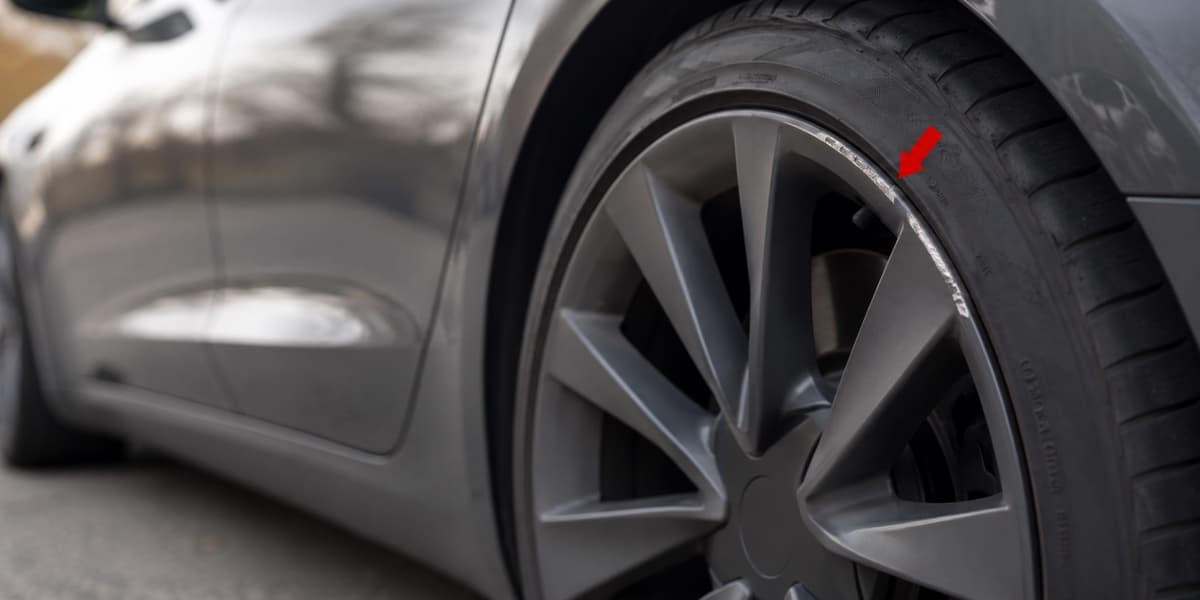
- Performance — bigger brakes, stickier (and pricier) tires, lowered/firmer suspension, unique wheels. Inspect tire wear and brake condition closely; a Performance's consumables are a real invoice, and curb-rashed wheels are common on a used one.
A firmer ride and more road noise are characteristic of the Model 3 (especially Performance) — that's the car's design, not a defect.
What's actually normal
Calibration, not paranoia. Generally considered normal on a Model 3: small and even panel gaps, a light degree of orange peel, a firm ride, some road and tire noise, and minor software quirks that clear after an update. The pattern that matters is asymmetry and persistence — one side different from the other, or an issue that doesn't go away.
If you find something
On a new car, photograph anything you find before you sign, from an angle that shows both the defect and its location, and report it to the delivery team while you're still there. Tesla has historically allowed a short window to report cosmetic issues, but the specifics have changed over time and vary by market — confirm the current policy at handover rather than assuming one. On a used car, the same documented list is your negotiation: cosmetic and wear items are numbers you can subtract; an undisclosed repaint, unexplained tire wear, or paperwork that doesn't line up are reasons to renegotiate or walk. Either way, the safest moment is always the same: before you drive away.
Frequently asked questions
What is the most common problem reported on a new Tesla Model 3?
Uneven panel gaps — doors, trunk, and hood/frunk not sitting symmetrically from side to side — are the single most commonly reported delivery issue on the Model 3, same as on the Model Y.
What changed with the Highland refresh?
The 2023+ 'Highland' Model 3 brought a redesigned front and rear light bar, a rear passenger touchscreen, acoustic glass for a quieter cabin, ventilated front seats on higher trims, and revised interior trim. Early Highland builds are worth inspecting a bit more carefully, as with any first-year revision.
Is the Model 3's ride firm compared to other sedans?
Yes — the Model 3, especially on Performance trim, is tuned firmer than a typical gas sedan, and some road/tire noise is part of that design. That's expected, not a defect.
Do RWD, Long Range, and Performance Model 3s have different issues to check?
The car itself is largely the same across trims; what differs is what's worth inspecting closely — brakes and tires on a Performance (bigger, pricier, more consumable), and confirming rated range matches the trim on an RWD.
Still deciding? Keep reading
- Can You Refuse a Tesla Delivery? When to Say Yes and When to Just Document ItWhat actually happens if you refuse a Tesla at handover, when it's worth doing, and when documenting and accepting is the smarter move — a calm framework for the decision, made under pressure, that most new owners only think about once.
- Common Problems When Taking Delivery of a New TeslaThe issues new-Tesla buyers most often find at delivery — panel gaps, paint defects, missing accessories and more — what's normal, what's not, and what each one can cost you.
- Common Problems When Buying a Used TeslaWhat to watch for before buying a used Tesla — battery degradation, hidden repaints, brakes, warranty and FSD transfer, paperwork — what each issue really costs, and when to renegotiate or walk away.
- Is It Normal? A Calibration Guide for New Tesla OwnersPanel gaps, orange peel, road noise, dash rattles, software quirks — what's genuinely normal on a new Tesla and what's actually worth flagging, so you stop second-guessing every little thing.
- Tesla Delivery Day: What to Expect, Step by StepA first-timer's roadmap for Tesla delivery day — what happens before you arrive, what to do at the delivery center, how long it actually takes, and how to leave with a documented inspection instead of just a signature.
- Tesla Model Y: Common Problems to Check Before You Buy or Take DeliveryThe issues Model Y buyers most often report — panel gaps, taillight condensation, paint and trim defects, wind noise, and what changed with the 2025 Juniper refresh — plus what's normal, what's not, and what each one costs you.
- Found a Tesla Problem After Delivery? What You Can Still DoYou're home, you noticed something you missed at handover — here's what actually changes once you've left the delivery center, how reporting windows work, and how to still get it resolved without the leverage you had on day one.
- Used Tesla Battery Health: What's Normal Degradation and What Costs YouBattery degradation is the #1 anxiety on a used Tesla — here's how to actually check it, what range loss is typical for the car's age and mileage, and how to tell normal wear from something worth negotiating over.