
Is It Normal? A Calibration Guide for New Tesla Owners
By the makers of TSL Check · August 7, 2026
Ask in any Tesla owners' group whether something is "normal" and you'll get twenty confident, contradictory answers. That's not because nobody knows — it's because the honest answer is usually "it depends," and nuance doesn't travel well in a comment thread. This guide is a calibration pass: the things new-Tesla owners most often ask about, and where the real line between normal and worth flagging actually sits.
None of this is about lowering your standards. It's about spending your attention on the things that matter — asymmetry, persistence, and anything safety-related — instead of on variation that exists in every factory-built car on the planet.
TL;DR — the pattern that separates normal from not:
- Normal: small and even imperfections, present on both sides equally
- Worth flagging: asymmetry — one side different from the other
- Normal: a quirk that clears on its own or after a software update
- Worth flagging: anything that persists or gets worse
- Always worth flagging: anything related to brakes, steering, restraints, or fire risk — when in doubt, don't wait
Panel gaps
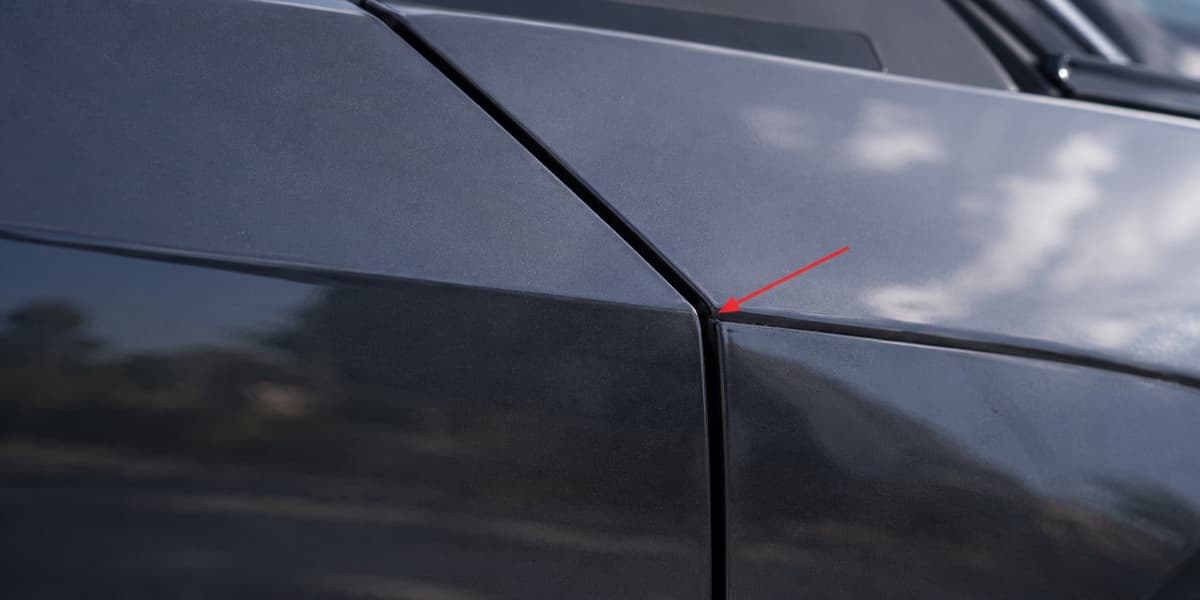
Small and even is normal. Wide on one side, tight on the other, is not. Every factory-built car — Tesla, German luxury brands, everyone — has some panel gap variation; it's a function of tolerances stacking up across a body made of dozens of parts. What's genuinely worth a second look is asymmetry: a door gap noticeably wider at the top than the bottom, or a hood/frunk gap clearly wider on one side than the other. That pattern points to something actually misaligned, not just normal variation.
Paint texture and finish
Some orange peel is normal; heavy texture and drips are not. "Orange peel" — a light, dimpled texture in the clear coat — exists to some degree on most factory-painted cars. It's the nature of spraying a liquid finish at production speed. What's worth documenting: texture you can see clearly from more than a meter away, frozen drips along the lower edge of a bumper or door, or a panel whose color or metallic flake doesn't quite match its neighbor.
Road noise and ride firmness
A firm ride and some road noise are part of the car's design, not a defect. The Model Y and Model 3 are tuned firmer than a typical gas sedan, and Performance trims with sportier tires are noisier still — that's the car being what it's supposed to be. What is worth checking: a new whistling noise at highway speed that wasn't there before, which usually traces back to a door or hatch seal that's folded, pinched, or not compressing evenly.
Rattles and interior noises
Occasional light rattles on rough pavement happen in many new cars. Trim panels settle in during the first weeks of driving, and a light click here and there over a pothole isn't unusual. A rattle that's loud, constant regardless of road surface, or traceable to the exact same spot every time is a different story — that's more often a clip or fastener that isn't fully seated, and it's a quick fix if you can point to where it's coming from.
Software quirks and screen behavior
A quirk that clears after a reboot or an update is normal; one that persists is not. Software-defined cars occasionally have small hiccups — a slow-to-load app, a setting that resets, a message that appears once and never again. If dismissing it or restarting the car makes it go away and it doesn't come back, that's the software equivalent of a factory variation. If the same alert or behavior keeps recurring after updates, it's worth reporting rather than living with.
Charging and range display quirks
Range estimates fluctuating with temperature and driving style is normal. Cold weather, highway speed, and aggressive driving all reduce real-world range versus the display — that's physics, not a fault. What's not normal: the car failing to charge at all at a working station, or a persistent charging-related warning that doesn't clear.
The pattern that matters, restated
If you take one thing from this guide, make it this: look for asymmetry and persistence, not imperfection. A car with zero variation anywhere doesn't exist. A car where one side is visibly different from the other, or where something doesn't go away on its own, is worth documenting and asking about — calmly, with photos, not as an accusation.
And the exception to all of it: safety
Calibration goes out the window for anything touching brakes, steering, seatbelts, airbags, or any smell or sign of overheating/burning. Those aren't "wait and see" items regardless of how minor they seem — get them looked at.
Turning "is this normal?" into a documented answer
The uncertainty itself is often the most stressful part — not knowing whether something is worth mentioning leaves people either over-reporting everything or staying quiet about real issues. Photographing what you see, at the moment you see it, turns a vague worry into something concrete you can compare, show a delivery advisor, or simply file away as confirmed-normal. That's the whole idea behind TSL Check's reference photos: not to diagnose for you, but to give you something real to compare against instead of guessing from a forum thread.
Frequently asked questions
Is some panel gap unevenness normal on a new Tesla?
A little variation is normal on any factory-built car, Tesla included. What's not normal is asymmetry — one side of the car clearly different from the other. Small and even is fine; wide on one side and tight on the other is worth flagging.
Is orange peel texture in the paint a defect?
Light orange peel (a subtle dimpled texture in the clear coat) exists to some degree on most factory-painted cars and is considered normal. Heavy texture visible from more than a meter away, or drips along panel edges, are what's worth documenting.
Why does my new Tesla make road noise?
Some road and wind noise is inherent to the Model Y and Model 3's design, especially on Performance trims with lower-profile tires. A new, distinct whistle at speed that wasn't there before, though, usually points to a door or hatch seal worth checking.
Are rattles from the dash or trim normal in a new Tesla?
Occasional light rattles on rough roads happen in many new cars as trim settles in. A rattle that's loud, constant, or comes from the same spot every time is more likely a clip that isn't fully seated — worth a look.
Still deciding? Keep reading
- Can You Refuse a Tesla Delivery? When to Say Yes and When to Just Document ItWhat actually happens if you refuse a Tesla at handover, when it's worth doing, and when documenting and accepting is the smarter move — a calm framework for the decision, made under pressure, that most new owners only think about once.
- Common Problems When Taking Delivery of a New TeslaThe issues new-Tesla buyers most often find at delivery — panel gaps, paint defects, missing accessories and more — what's normal, what's not, and what each one can cost you.
- Common Problems When Buying a Used TeslaWhat to watch for before buying a used Tesla — battery degradation, hidden repaints, brakes, warranty and FSD transfer, paperwork — what each issue really costs, and when to renegotiate or walk away.
- Tesla Delivery Day: What to Expect, Step by StepA first-timer's roadmap for Tesla delivery day — what happens before you arrive, what to do at the delivery center, how long it actually takes, and how to leave with a documented inspection instead of just a signature.
- Tesla Model 3: Common Problems to Check Before You Buy or Take DeliveryThe issues Model 3 buyers most often report — panel gaps, paint defects, trunk and trim rattles, wind noise, and what changed with the 2023+ Highland refresh — plus what's normal, what's not, and what each one costs you.
- Tesla Model Y: Common Problems to Check Before You Buy or Take DeliveryThe issues Model Y buyers most often report — panel gaps, taillight condensation, paint and trim defects, wind noise, and what changed with the 2025 Juniper refresh — plus what's normal, what's not, and what each one costs you.
- Found a Tesla Problem After Delivery? What You Can Still DoYou're home, you noticed something you missed at handover — here's what actually changes once you've left the delivery center, how reporting windows work, and how to still get it resolved without the leverage you had on day one.
- Used Tesla Battery Health: What's Normal Degradation and What Costs YouBattery degradation is the #1 anxiety on a used Tesla — here's how to actually check it, what range loss is typical for the car's age and mileage, and how to tell normal wear from something worth negotiating over.